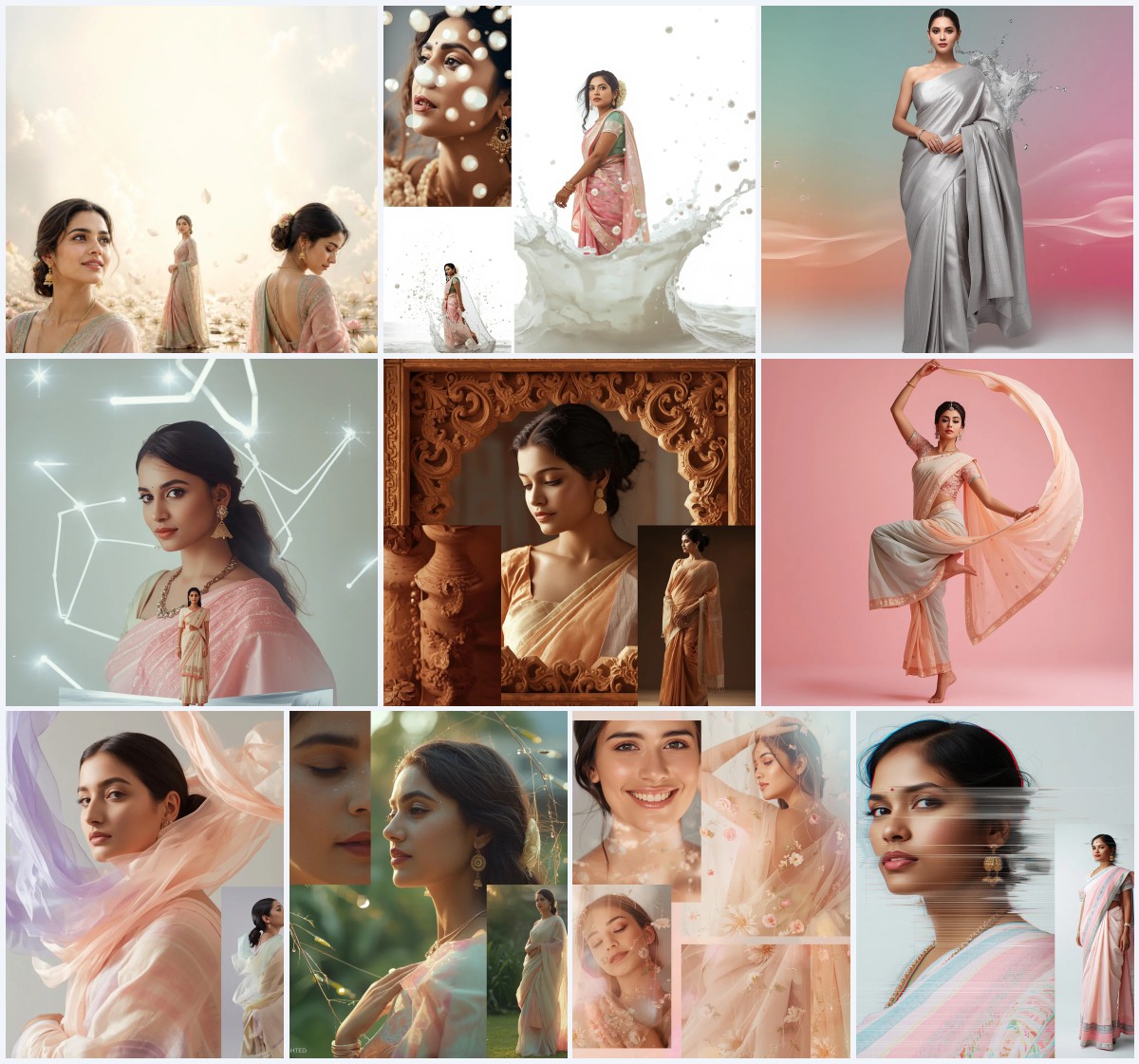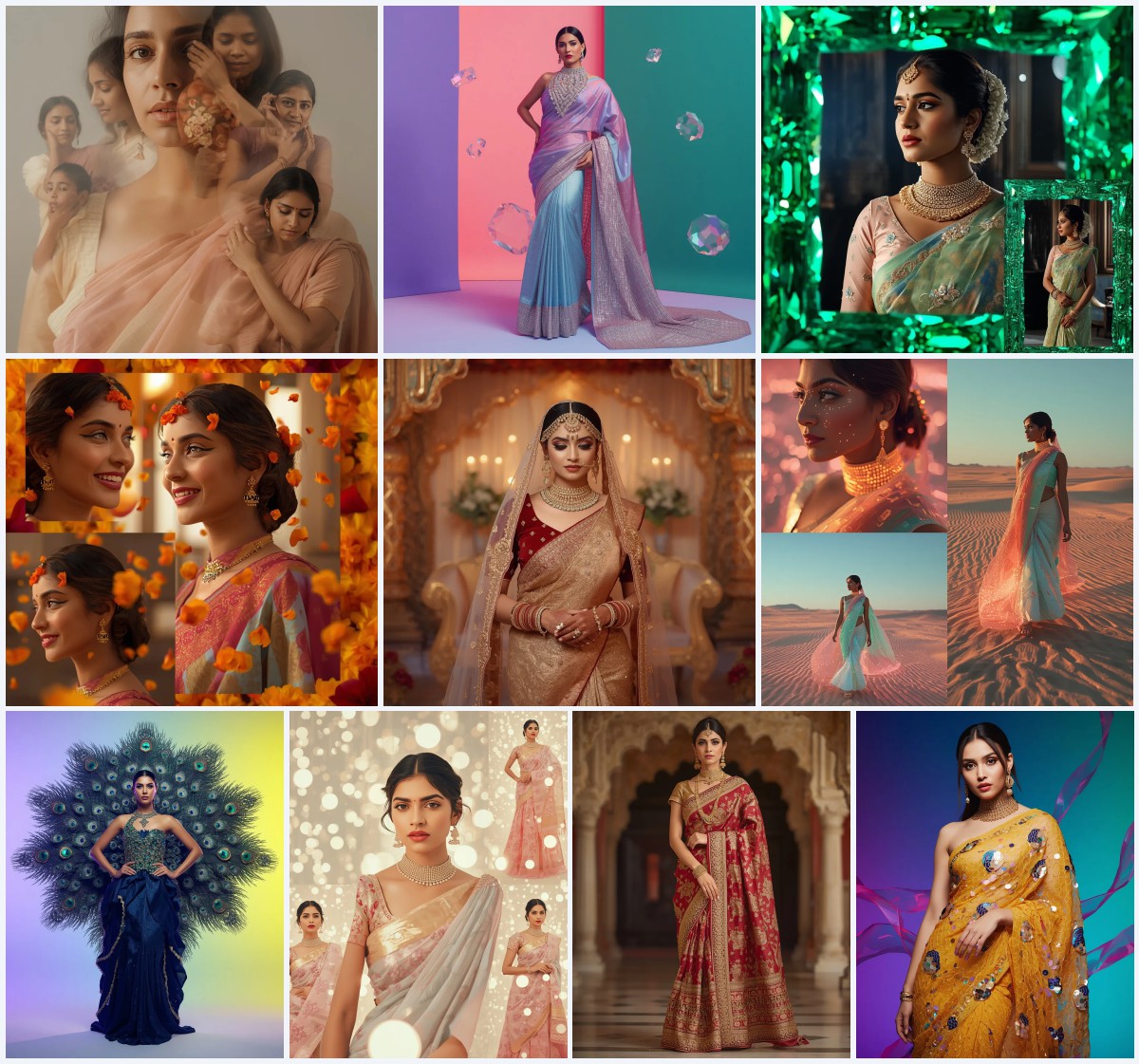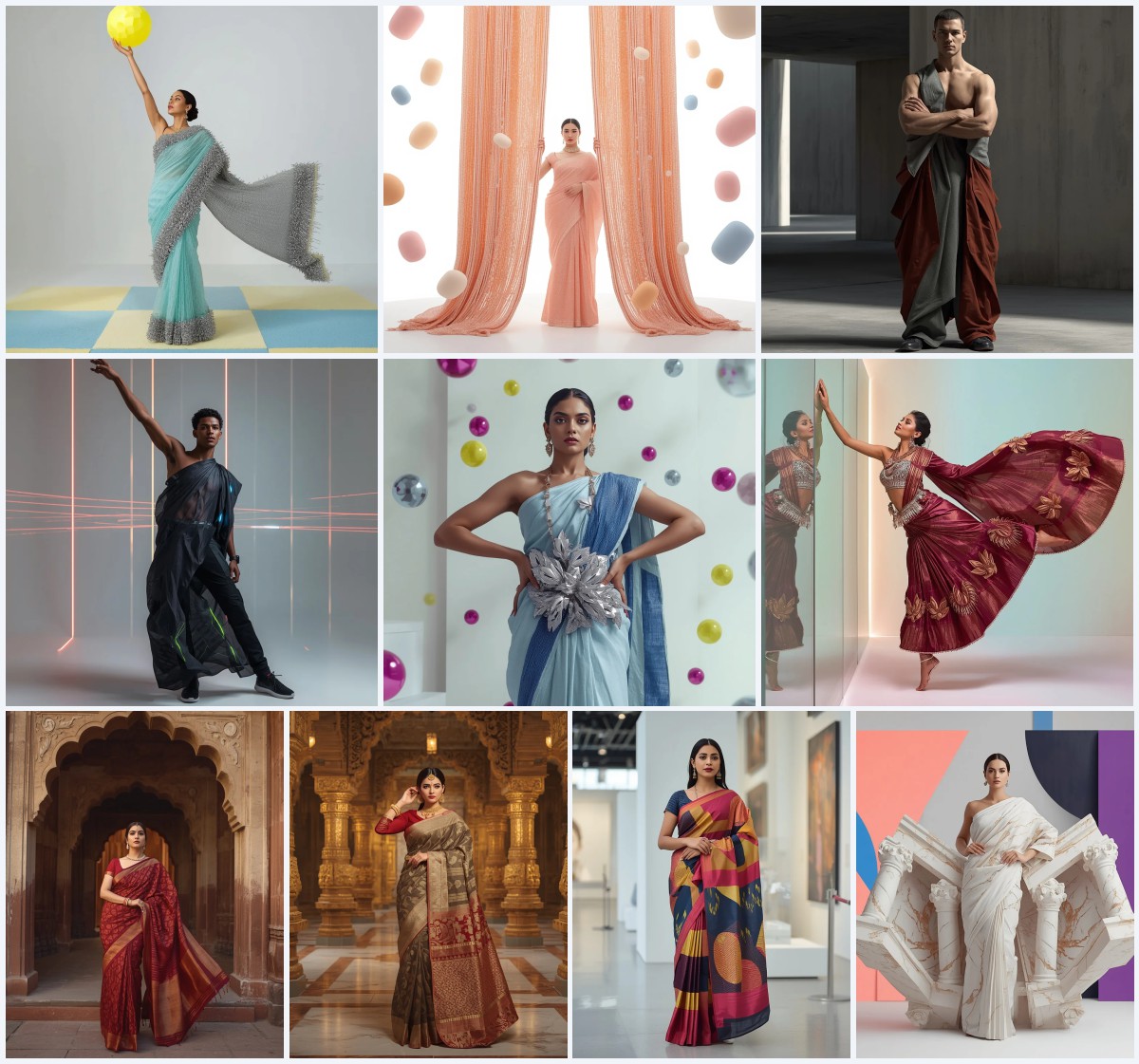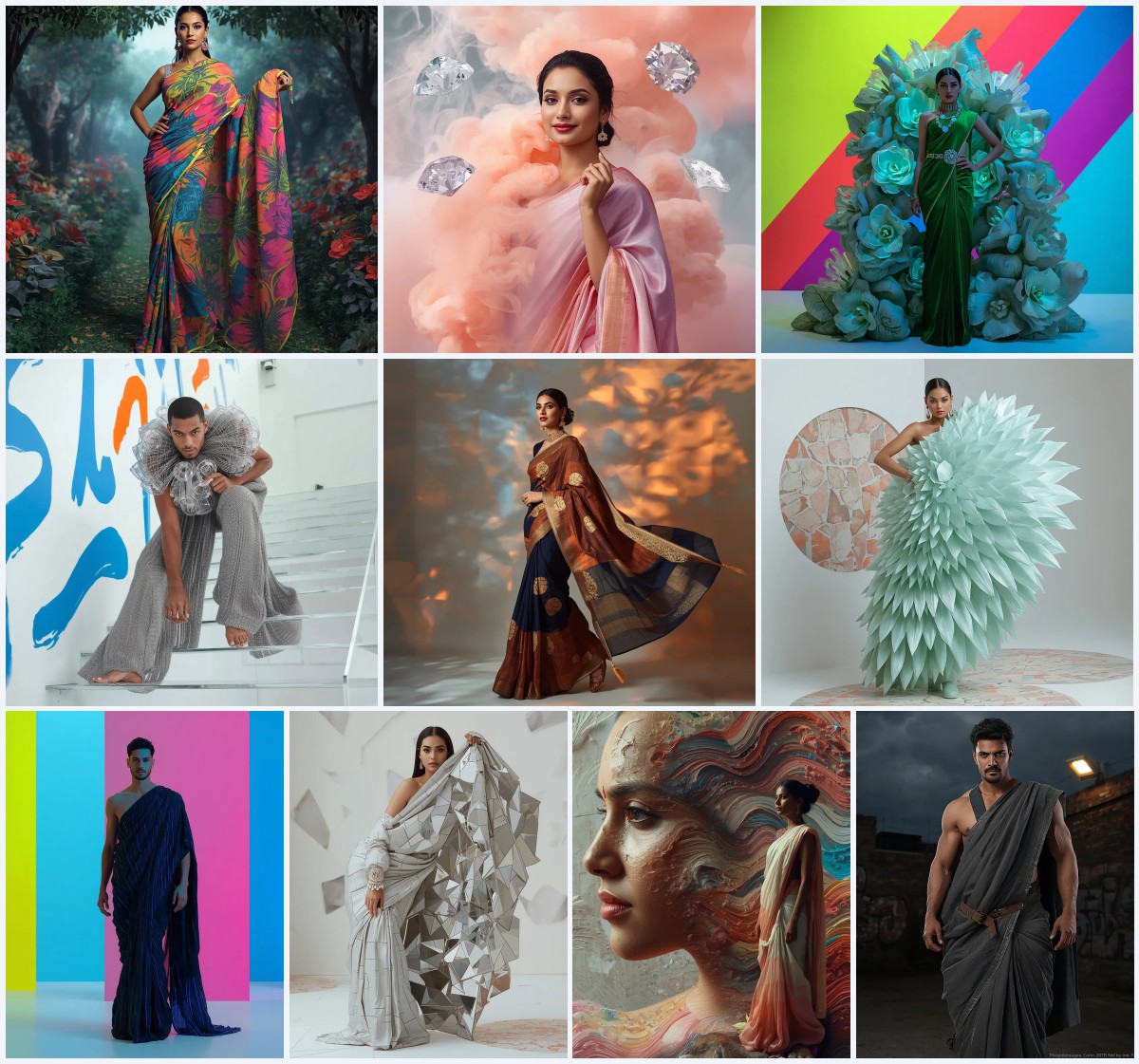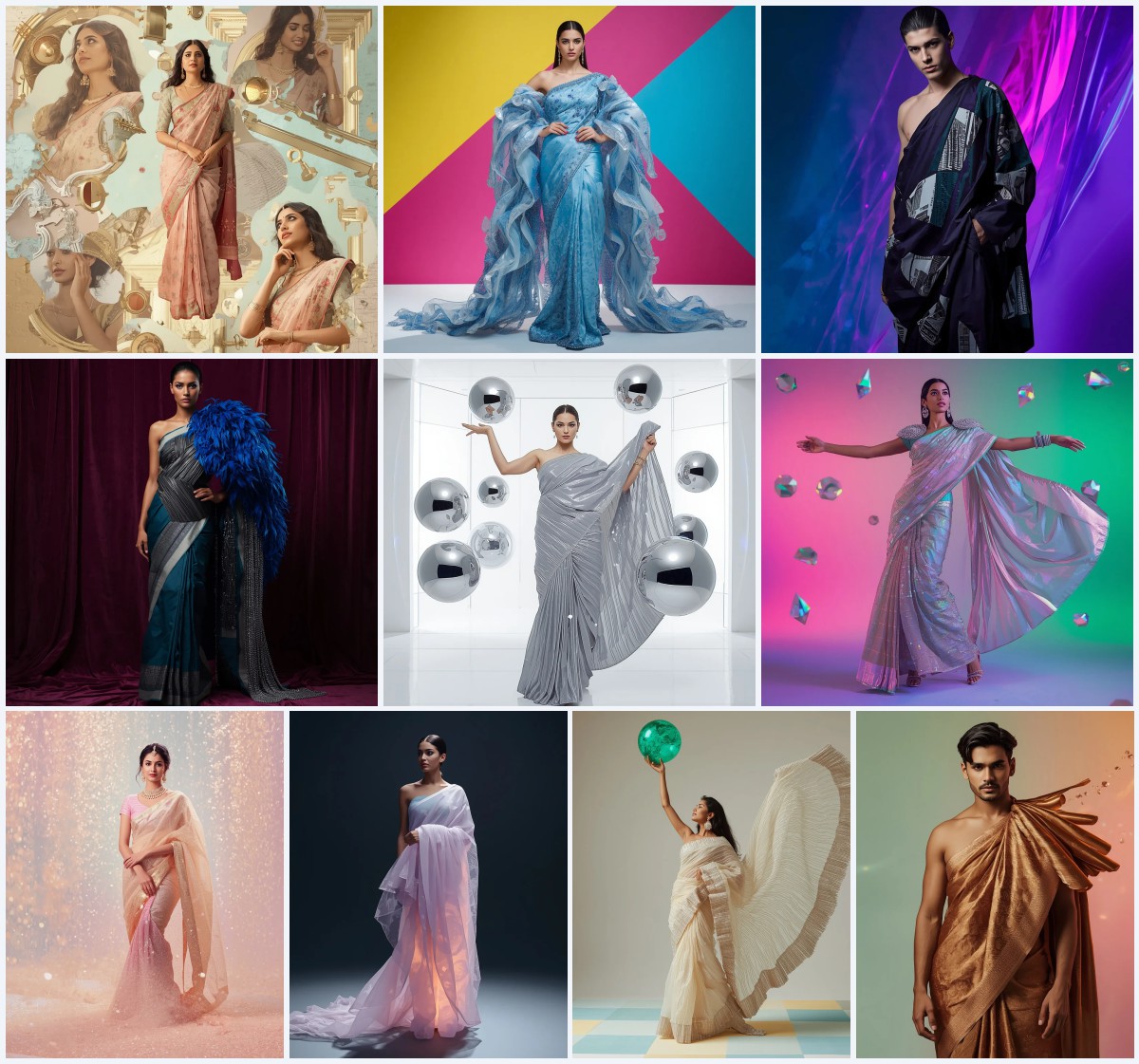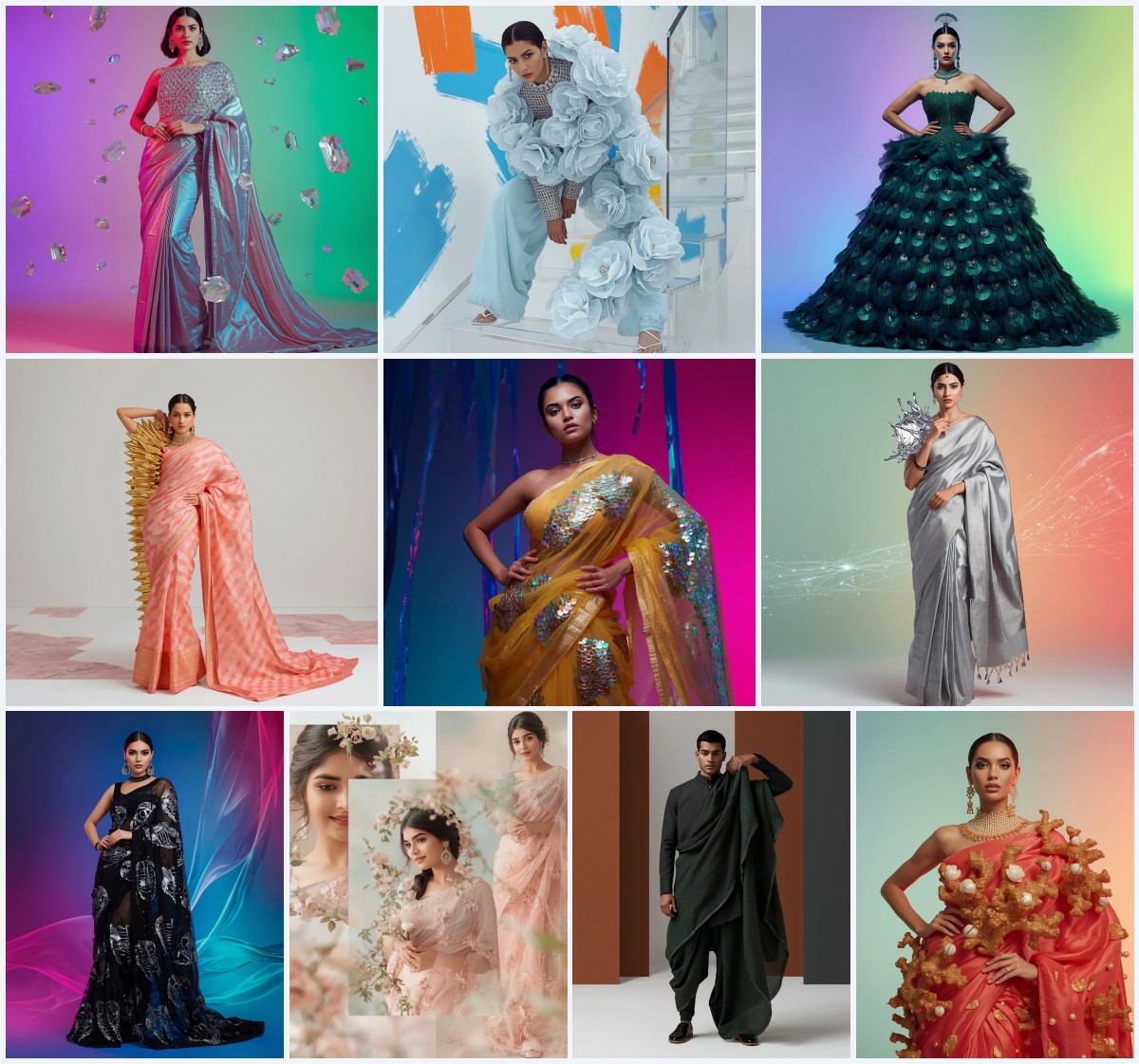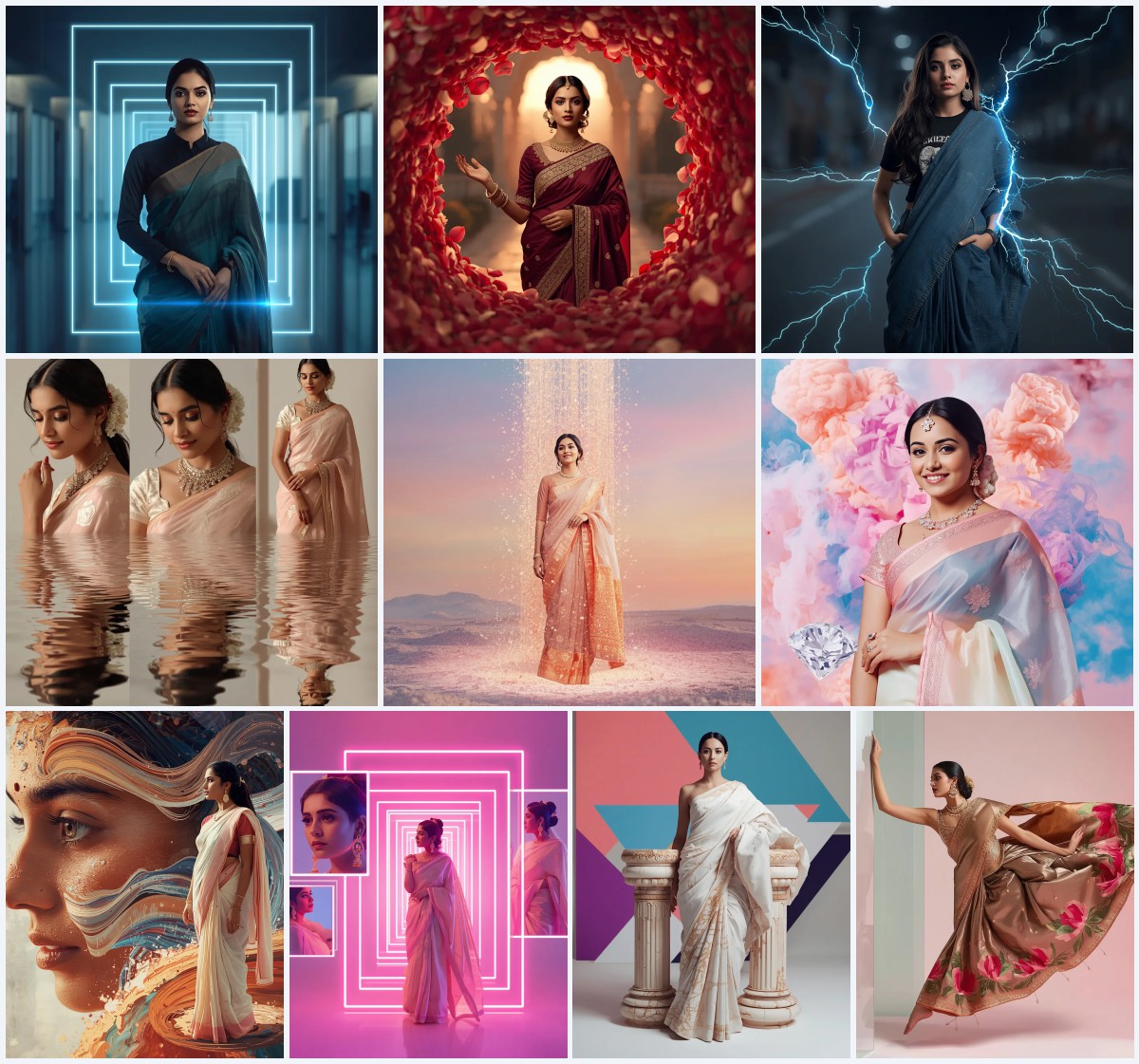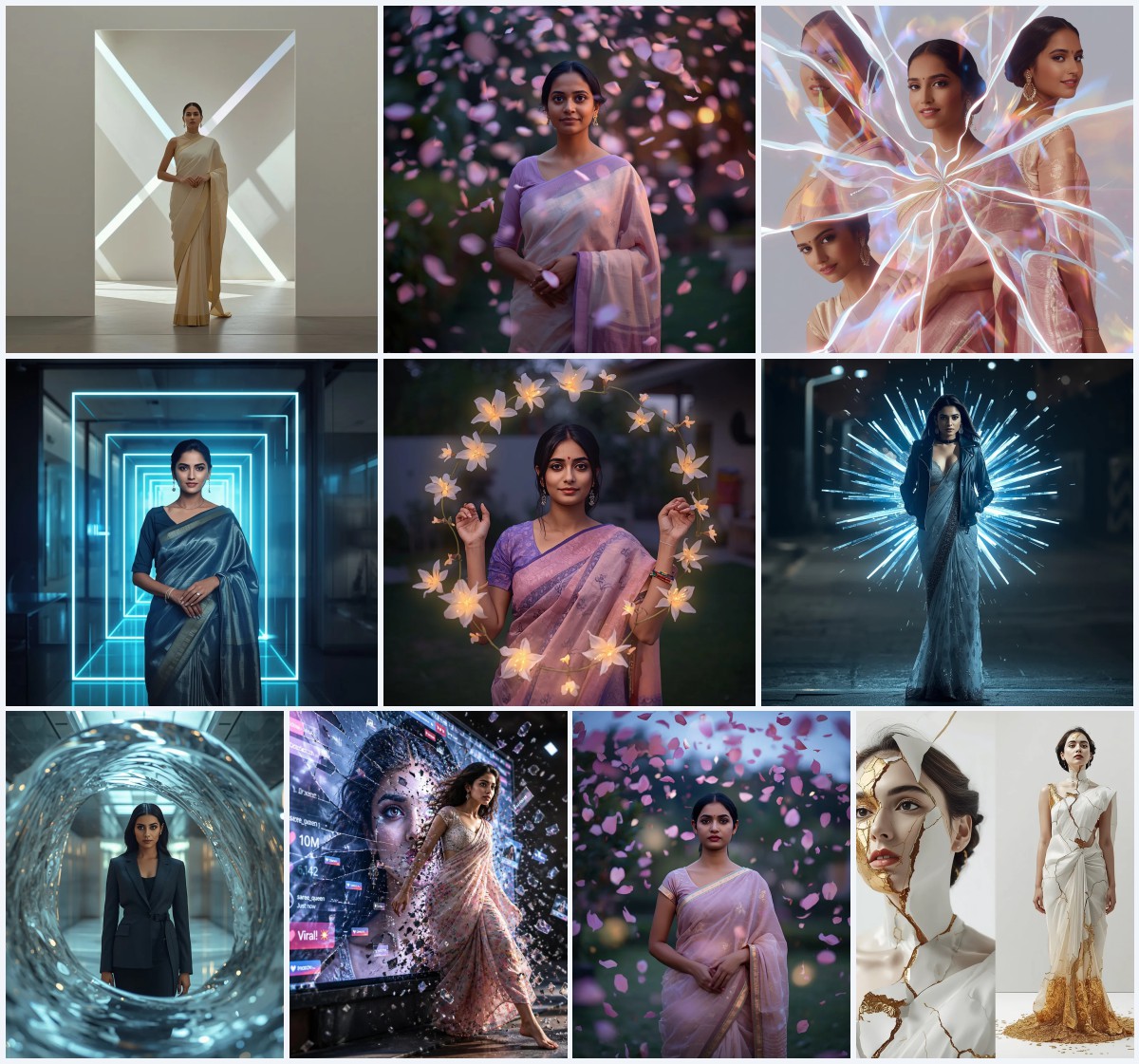


Explore the ultimate collection of generative art prompts designed to fuse traditional South Asian elegance with cutting-edge architectural fashion aesthetics.
Generative artificial intelligence has completely revolutionized how we approach fashion design and digital portraiture. By leveraging advanced text-to-image systems, creators can now design complex, high-fashion garments that would cost thousands of dollars to produce in the physical world. This breakthrough has opened up a new realm of creative expression, enabling designers, hobbyists, and social media influencers to experiment with textures, fabrics, and structural concepts that defy traditional manufacturing limits.
Among these innovations, the traditional saree has emerged as a brilliant canvas for digital experimentation. With its fluid lines, rich history, and draping complexity, the saree is perfectly suited for avant-garde reinterpretations. From embedding glowing fiber optics into the weave to structuring the fabric with rigid steel panels, AI prompts allow us to reimagine this classic garment through a futuristic lens. This guide explores how you can harness these prompts to create breathtaking digital art right from your computer.
Whether you are creating content for an Instagram feed, building a digital fashion portfolio, or simply exploring the limits of AI-generated art, these prompts provide a robust foundation. By understanding the underlying mechanics of fabric simulation, lighting modifiers, and compositional styles, you can consistently generate stunning, high-definition imagery that stands out in any digital space.
What Are Accessible Saree Art?
Accessible Saree Art refers to the democratization of high-fashion editorial design through generative AI prompts. Historically, creating a conceptual garment featuring rigid felt, polished steel, or embedded micro-LEDs required an enormous production budget, specialized designers, and professional studio setups. AI-driven art tools change this dynamic completely, allowing anyone to render these complex visual concepts instantly by simply describing them in text.
These prompts are carefully structured instructions that guide AI models to understand both the traditional form of the saree and the untraditional, high-concept materials being applied to it. By blending precise fabric descriptions with architectural terminology, creators can produce images that look like they belong on the cover of a luxury fashion magazine.
Why Accessible Saree Art Is Trending
The sudden surge in popularity of digital saree art is driven by a desire to celebrate cultural heritage while embracing futuristic design trends. On social media platforms like Instagram, creators are constantly searching for unique, eye-catching visuals that break the monotony of standard portrait photography. The juxtaposition of a traditional garment with hyper-futuristic or highly structured materials creates an instant visual hook.
Furthermore, the rise of digital fashion and virtual avatars has made these prompts incredibly valuable. Designers are using AI to rapidly prototype concepts before committing to physical production, while digital artists are utilizing them to build immersive, sci-fi-themed portfolios that challenge our perceptions of fashion and identity.
Popular Styles You Can Create
With the prompts provided in this collection, you can explore a diverse array of avant-garde and high-fashion styles. Each style introduces a unique texture, material interaction, and environmental mood to redefine the traditional silhouette.
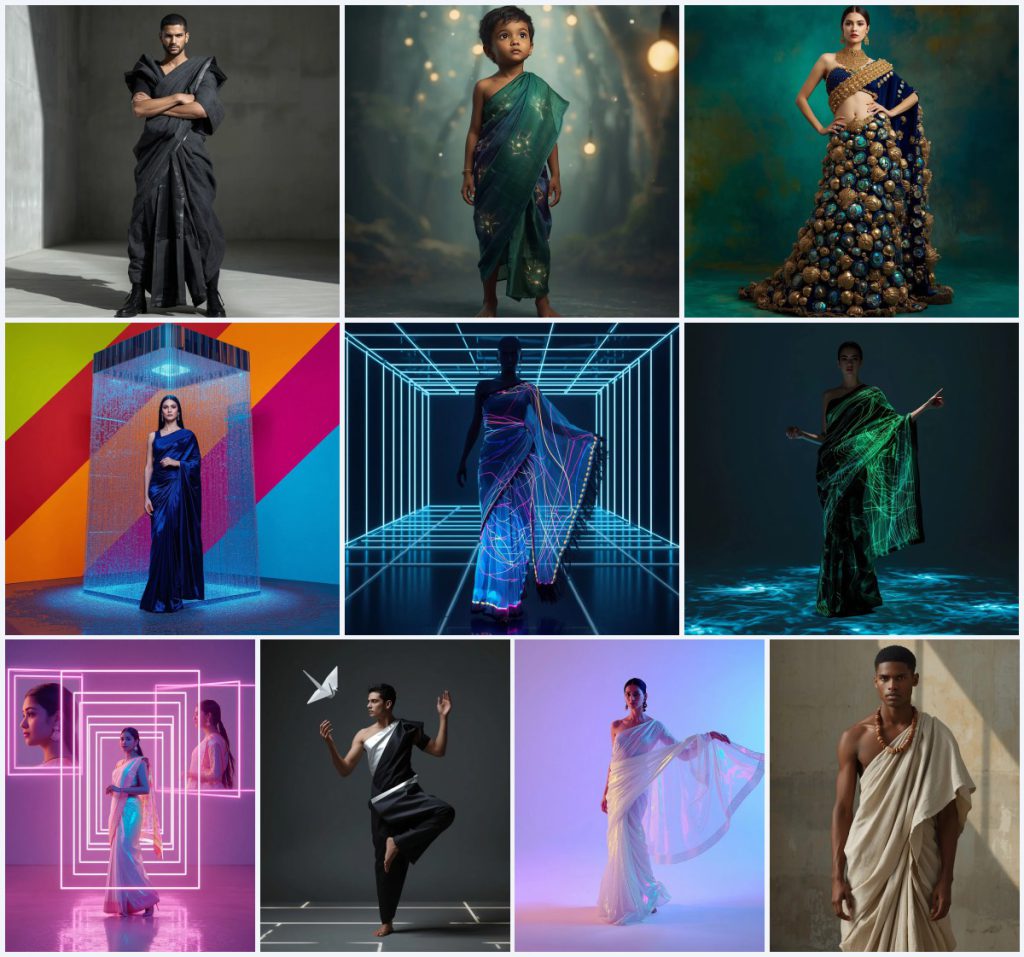
- Architectural Veil: Features a male model in a structured garment made of rigid, dark grey felt and polished steel panels, creating an armor-like silhouette.
- Techno-Organic Weave: Blends organic tree-branch structures with a bioluminescent emerald and deep violet weave that pulses with soft light.
- Submerged Treasure: A heavy, structural design featuring deep-sea blue velvet encrusted with massive gold barnacles, pearls, and iridescent abalone shells.
- Digital Waterfall: A futuristic concept where a deep indigo velvet base is caged inside an architectural structure of laser-cut iridescent acrylic and micro-LEDs.
- Neon Line Art: Uses sheer, intelligent fabric displaying dynamic, interactive neon patterns in electric blue, magenta, and yellow.
- Quantum Entanglement: Deep space black fabric interwoven with glowing, ultra-fine fiber optic filaments in electric green and cosmic blue.
- Neon Frame Layers: A cinematic collage style where multiple glowing neon frames float around an Indian woman in a pastel saree, creating layered compositions.
- Floating Origami: An ultra-modern male model ensemble utilizing sharp, angular folds of stiff matte black fabric and reflective silver.
- Chromatic Mirage: A hyper-realistic style showcasing a color-shifting fabric that creates iridescent waves of pastels and bright hues.
- Sculpted Fabric Art: A grounded, raw aesthetic featuring a male model in a heavy, unbleached linen garment with oversized wooden beads and copper accents.
How to Use Accessible Saree Art
To get the most out of these prompts, you need to follow a structured workflow that ensures the AI interprets your creative vision accurately. Below is a step-by-step guide to generating your first high-fashion masterpiece.
- Select one of the premium prompts from our curated collection that matches your desired aesthetic.
- Open your preferred generative AI tool, ensuring you have the latest model version active for the best detail rendering.
- Copy the prompt text and paste it directly into the input field of the AI tool.
- Review the prompt and customize specific details, such as changing the color palette, the model's expression, or the background setting to suit your style.
- Set the aspect ratio parameter (e.g., --ar 9:16 for vertical social media posts or --ar 16:9 for landscape displays).
- Generate the initial batch of images and analyze the drapes, lighting, and textures for any visual anomalies.
- Select the best image from the batch and apply upscaling or subtle variations to perfect the fine details before downloading.
What Kind of Base Photo Works Best?
When generating these high-fashion images, the composition and structure of your virtual subject are critical. For the best results, aim for clean, uncluttered backgrounds that do not compete with the complex textures of the garments. Minimalist concrete walls, dark studio settings, or simple color gradients work beautifully because they force the viewer's eye onto the intricate details of the saree.
Additionally, dynamic and powerful poses are essential. Statuesque, commanding stances, hands crossed over the chest, or asymmetrical balance poses help emphasize the structural and rigid elements of the avant-garde designs, making the final output look like a genuine editorial photoshoot.
Which AI Tools Deliver the Best Results?
Different AI tools excel at different aspects of image generation. Some are incredible at rendering hyper-realistic skin textures, while others are superior at handling complex lighting and glowing elements.
| AI Tool | Strengths for Saree Art | Recommended Settings |
|---|---|---|
| Midjourney | Exceptional rendering of fabric textures, metallic surfaces, and cinematic lighting. | Use aspect ratio --ar 9:16 and high stylization parameters. | Flux | Superb prompt adherence and clean architectural structures. | Paste prompts exactly as written without heavy modifications. | Leonardo | Great control over fine-art styles and custom photorealistic models. | Activate the PhotoReal mode with high-definition presets. | ChatGPT / Gemini | Excellent for refining prompt ideas, generating variations, and direct image outputs. | Ask the system to generate a highly detailed visual based on the prompt. |
Pro Tips
To elevate your digital art from good to breathtaking, focus on material contrast. Combine soft, luxurious fabrics like velvet or silk with incredibly rigid, industrial elements like polished steel, acrylic, or copper. This contrast creates a powerful visual tension that immediately draws attention.
Furthermore, do not shy away from using lighting modifiers in your prompts. Specifying terms like "volumetric lighting," "soft neon glow," or "cinematic rim lighting" will help the AI model understand how light should bounce off the metallic, glass, or bioluminescent components of your design.
Common Issues and Quick Fixes
Generating complex, multi-material garments can sometimes confuse AI models. Below are some common issues you might encounter and how to easily resolve them.
| Common Issue | Root Cause | Quick Fix |
|---|---|---|
| Distorted hands or fingers | Complex poses confuse the AI's spatial understanding. | Inpaint the hands specifically or use prompts where hands are resting or crossed. | Textures blending together messily | The prompt lacks clear separation between materials. | Use commas and clear descriptors like "contrasted with" or "overlaid on top of". | Incorrect draping physics | The AI treats the saree like a standard dress. | Add structural keywords such as "architectural folds", "rigid pleats", or "traditional drape". |
Frequently Asked Questions
Here are some of the most common questions creators ask when working with generative saree prompts.
What is accessible saree art in AI generation?
Accessible saree art refers to the use of highly descriptive text prompts in generative AI tools to create stunning, high-fashion representations of traditional sarees without the need for physical materials or expensive photoshoots.
Which AI tools are recommended for running these prompts?
You can copy and paste these prompts directly into advanced generative systems such as Midjourney, Flux, Leonardo, ChatGPT, or Gemini to achieve premium, high-resolution visual outputs.
How can I fix unnatural fabric drapes in the AI output?
You can resolve unnatural drapes by adding descriptive keywords like 'architectural folds', 'fluid drape', or 'sculpted pleats' to guide the AI's rendering of fabric physics.
Conclusion
Generative AI has opened up an incredible frontier for digital fashion, making high-concept, accessible saree art available to creators worldwide. By combining traditional cultural aesthetics with futuristic materials, you can create unique, high-impact visuals that captivate audiences. Experiment with the prompts, customize the details, and let your creative vision redefine the boundaries of digital fashion design.